A cancer diagnosis changes everything. When that diagnosis involves the prostate, one of the biggest questions patients face is: what's the safest, least painful way to treat it?
Over the last decade, robotic-assisted surgery has quietly transformed how prostate cancer is treated around the world. And India has become one of the leading destinations for this kind of care.
If you're researching the best hospital in India for prostate cancer treatment, or simply trying to understand what robotic surgery actually involves, this guide breaks it all down in plain language. We'll cover how the procedure works, why so many patients are choosing medical treatment in India, what it costs, and how to pick the right surgical team.
By the end, you'll have a clear picture of whether robotic-assisted prostate cancer surgery is the right path for you or a loved one.
What Is Robotic-Assisted Prostate Cancer Surgery?
Robotic-assisted prostate cancer surgery, medically known as robotic radical prostatectomy, is a minimally invasive procedure used to remove the prostate gland along with surrounding tissue affected by cancer.
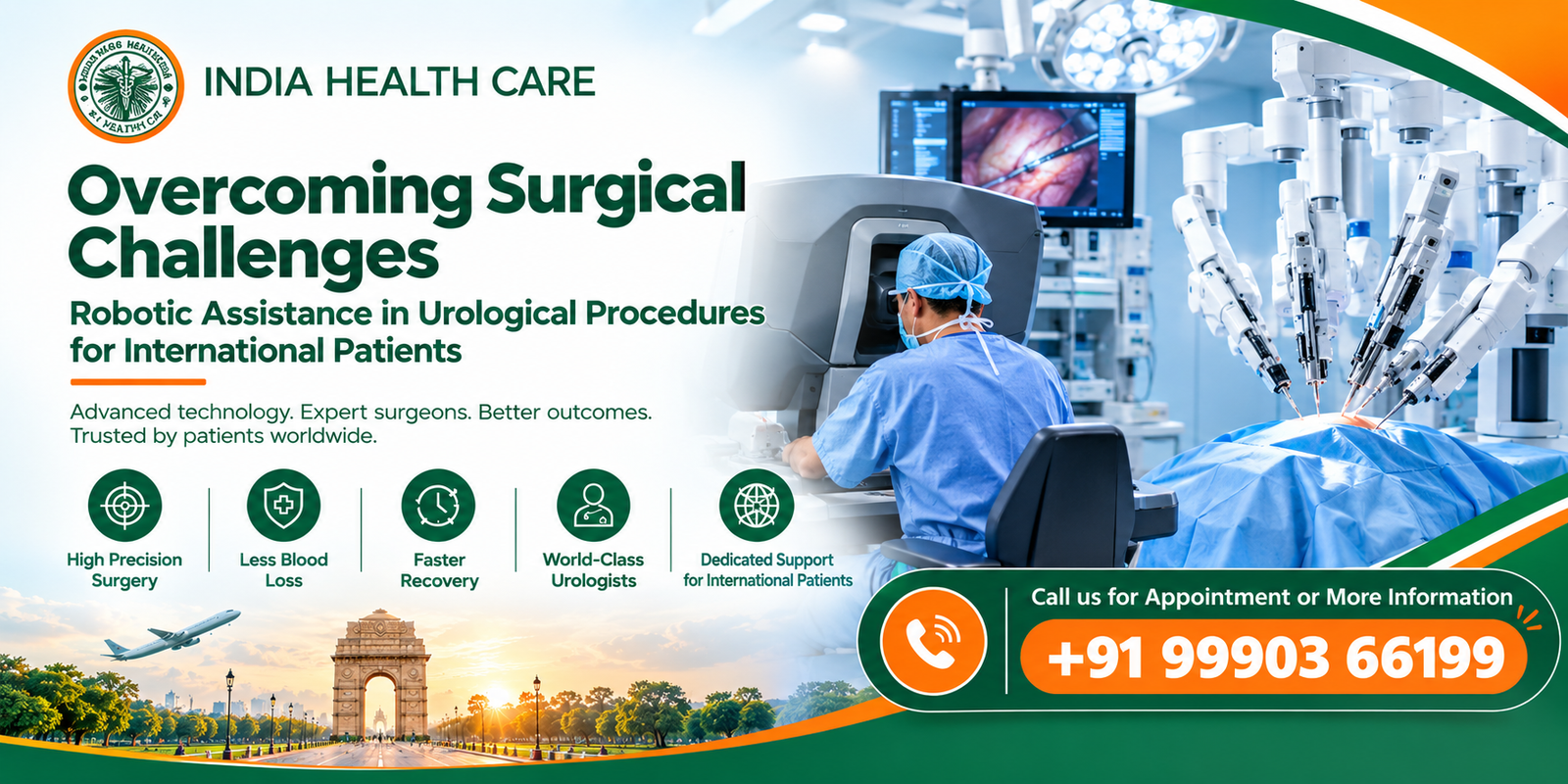
Instead of a large open incision, the surgeon makes a few small cuts in the abdomen. A robotic system — most commonly the da Vinci surgical system — is then used to carry out the operation with extreme precision.
Here's the important part: the robot doesn't operate on its own. It's fully controlled by a trained urologic oncologist sitting at a console nearby. The system simply translates the surgeon's hand movements into smaller, steadier motions inside the body.
This approach gives surgeons a magnified, 3D view of the prostate and nearby nerves, which helps them avoid damaging structures responsible for urinary control and sexual function.
Why It's Called "Minimally Invasive"
Traditional prostate surgery required a large cut, longer hospital stays, and a slow recovery. Robotic surgery uses tiny incisions — usually less than a centimeter each — which means:
- Less blood loss during surgery
- Lower risk of infection
- Shorter hospital stays
- Faster return to normal activities
For many men, this difference is the deciding factor when choosing where and how to get treated.
Why Patients Choose India for Prostate Cancer Treatment
India has quietly become a hub for advanced urological care. This isn't accidental — it's the result of years of investment in technology, training, and infrastructure.
Here's why so many international and domestic patients now consider cancer treatment in India a smart choice.
World-Class Technology at Lower Costs
Many hospitals across Delhi, Mumbai, Chennai, and Bangalore now operate the latest-generation da Vinci robotic systems — the same technology used in top hospitals in the US and Europe.
The difference? The overall cost of the same surgery in India is often a fraction of what it would cost in Western countries, without compromising on the quality of equipment or surgical skill.
Best Doctors in India With International Training
Many of the best doctors in India performing robotic prostate surgery have trained or worked at leading hospitals in the UK, US, or Germany before returning home. This combination of global exposure and local affordability is rare and valuable.
Surgeons specializing in robotic urologic oncology often have thousands of successful procedures under their belt, which matters a great deal in a surgery where precision determines long-term outcomes.
JCI-Accredited Hospitals
Several hospitals offering robotic prostate surgery in India are JCI-accredited hospitals, meaning they meet international standards for patient safety, hygiene, and clinical outcomes. This accreditation gives international patients extra confidence when choosing where to be treated.
How to Identify the Best Hospital in India for This Surgery
Not every hospital that offers robotic surgery is equally experienced. Here's what to actually look for.
Surgical Volume Matters
Ask how many robotic prostatectomies the hospital's team performs each year. A center that performs this surgery regularly will generally have better outcomes than one that does it occasionally.
Check for Multidisciplinary Cancer Care
The best hospital in India for this procedure won't just have a skilled surgeon — it will have a full team, including:
- Medical oncologists
- Radiation oncologists
- Pathologists
- Physiotherapists for post-surgery recovery
This team-based approach ensures nothing is missed before or after surgery.
International Patient Support Services
If you're traveling from abroad, look for hospitals with dedicated international patient desks. These teams typically assist with visa letters, airport pickup, accommodation, interpreter services, and coordinating consultations — all key parts of a smooth medical tourism India experience.
How the Robotic Surgery Procedure Works: Step by Step
Understanding the process can ease a lot of anxiety before surgery. Here's a simplified walkthrough.
1. Pre-surgical evaluation: Blood tests, imaging (MRI or CT scans), and a biopsy review help the surgical team plan the exact approach.
2. Anesthesia: The patient is placed under general anesthesia, meaning they are fully asleep and feel nothing during the procedure.
3. Small incisions: The surgeon makes five or six small incisions in the abdomen, each about 1 to 2 centimeters.
4. Robotic arms are positioned: Thin robotic arms, fitted with surgical instruments and a high-definition camera, are inserted through the incisions.
5. Surgeon operates from the console: Sitting a few feet away, the surgeon views a magnified 3D image and controls the robotic arms with hand and foot movements.
6. Nerve-sparing technique: Where possible, the surgeon uses a nerve-sparing prostatectomy technique to protect the nerves responsible for erectile function and urinary control.
7. Prostate removal: The prostate gland, along with nearby lymph nodes if needed, is carefully removed and placed in a specimen bag for extraction through one of the incisions.
8. Closing up: The small incisions are closed with a few stitches or surgical glue, and the patient is moved to recovery.
The entire procedure typically takes between 2 to 4 hours, depending on complexity.
Benefits of Choosing Robotic Surgery Over Traditional Methods
Let's look at why so many patients and doctors now prefer this approach.
Greater Precision
The robotic system filters out natural hand tremors and allows movements far more precise than the human hand alone can achieve.
Reduced Blood Loss
Because incisions are smaller and the surgical field is magnified, blood loss during robotic surgery is significantly lower compared to open surgery.
Shorter Hospital Stay
Most patients are discharged within 2 to 4 days, compared to a week or more with open surgery.
Faster Recovery Time
Many patients return to light daily activities within 2 weeks, and to full activity within 4 to 6 weeks.
Better Preservation of Function
Because of improved visualization, surgeons are often better able to preserve nerves related to urinary and sexual function, which can improve long-term quality of life.
Robotic Surgery vs Open Surgery vs Laparoscopic Surgery
Here's a side-by-side comparison to help you understand the differences clearly.
This table shows why robotic surgery, despite a slightly higher upfront cost, is often considered worth it for the reduced complications and faster return to normal life.
Cost of Robotic Prostate Cancer Surgery in India
One of the biggest reasons patients travel to India is cost. Robotic prostate surgery in India typically costs a fraction of what it does in the US, UK, or many parts of Europe — while using the same equipment and comparable surgical expertise.
This is a major reason affordable cancer treatment in India has become such a widely searched topic among international patients.
Costs can vary based on:
- The hospital's location and reputation
- The surgeon's experience level
- Length of hospital stay
- Any additional treatments needed (radiation, hormone therapy, etc.)
It's always best to request a detailed cost estimate directly from the hospital's international patient department, since prices vary by case complexity.
Medical Tourism in India for Cancer Treatment
India has become one of the top global destinations for medical tourism India seekers, and cancer care is a major part of that growth.
What Makes the Experience Easier for International Patients
- Visa assistance: Many hospitals help arrange medical visa invitation letters.
- Language support: Interpreter services are available for non-English-speaking patients.
- Accommodation help: Hospitals often have tie-ups with nearby guest houses or hotels for patients and their families.
- Coordinated travel: From airport pickup to follow-up appointments, most large hospitals offer end-to-end coordination.
Recovery After Robotic Prostate Cancer Surgery
Recovery is often smoother than people expect, but it still requires patience and care.
First Few Days
Patients usually walk within a day of surgery to reduce the risk of blood clots. A catheter is typically kept in place for about 1 to 2 weeks to allow the urinary tract to heal.
Weeks 2 to 4
Most patients can resume light activities, short walks, and desk work. Heavy lifting and strenuous exercise are still restricted.
Weeks 4 to 6
By this stage, most men are back to near-normal routines, though full recovery of urinary control and sexual function can take a few more months in some cases.
Follow-Up Care
Regular PSA (prostate-specific antigen) blood tests are scheduled after surgery to monitor for any signs of cancer recurrence.
Who Is a Good Candidate for Robotic Prostate Surgery?
Not every patient is automatically suited for this approach. Good candidates typically include those who:
- Have cancer confined to the prostate gland (localized cancer)
- Are in reasonably good overall health
- Do not have extensive scar tissue from previous abdominal surgeries
- Have discussed all treatment options with a urologic oncologist
Patients with more advanced or widespread cancer may need a combination of treatments, including surgery, radiation, or hormone therapy.
Frequently Asked Questions
1. Is robotic prostate cancer surgery safe? Yes. It's considered a safe and well-established procedure when performed by an experienced surgical team at a reputable hospital.
2. How long does the surgery take? Most robotic prostatectomies take between 2 to 4 hours, depending on the complexity of the case.
3. Will I need radiation therapy after surgery? Not always. Some patients need only surgery, while others may require additional radiation or hormone therapy based on pathology results.
4. How soon can I return to work after surgery? Most patients return to desk-based work within 2 to 4 weeks, though physically demanding jobs may require a longer recovery period.
5. Why do so many international patients choose India for this surgery? The combination of experienced surgeons, modern robotic technology, and significantly lower costs makes India an attractive option for medical treatment in India seekers from around the world.
Conclusion
Robotic-assisted prostate cancer surgery has changed what recovery looks like for thousands of men. Smaller incisions, greater precision, and faster healing times make it one of the most patient-friendly options available today.
India's combination of skilled surgeons, advanced robotic technology, and lower treatment costs has made it a trusted choice for patients seeking quality care without the extreme expense often found elsewhere.
If you or a loved one is exploring treatment options, take the time to research hospitals carefully, ask about the surgical team's experience, and get a clear cost estimate before making a decision. A well-informed choice today can make a real difference in your recovery and long-term health tomorrow.
Ready to explore your options? Reach out to a hospital's international patient department for a personalized consultation and treatment plan.