Getting a diagnosis that involves the kidneys, bladder, or prostate is scary enough. Add the stress of traveling to another country for surgery, and it can feel overwhelming. This is exactly why so many families now search for cancer treatment in India before making a final decision.
Over the last decade, India has quietly become one of the most trusted names in urology. Not because of luck, but because of steady investment in robotic surgery, skilled surgeons, and hospitals built to handle complex cases from patients who fly in from dozens of countries every month. In fact, cancer treatment in India has grown so rapidly that entire hospital departments now exist solely to coordinate care for overseas patients.
This article breaks down how robotic assistance is changing urological surgery, why it matters for people traveling from abroad, and what to actually expect from the process — from your first consultation to your flight back home. Whether you are exploring medical treatment in India for the first time or comparing hospitals after an initial diagnosis elsewhere, this guide will walk you through the practical details that matter most.
Why Urological Surgery Is So Challenging
Urological cancers — prostate, kidney, bladder, and testicular cancers among them — sit in a tight, delicate part of the body. Nerves, blood vessels, and other organs are packed closely together.
Traditional open surgery for these conditions often means:
- Larger incisions
- More blood loss
- Longer hospital stays
- Slower recovery
- Higher risk of nerve damage (which can affect bladder or sexual function)
For decades, surgeons had to balance two competing goals: removing the cancer completely, and preserving as much healthy tissue and nerve function as possible. Human hands, no matter how skilled, have natural limits — tremors, fatigue, and restricted movement in tight spaces.
This is the exact gap that robotic-assisted surgery was designed to close.
It also explains why so many patients now look beyond their home country. When a local hospital cannot offer robotic options, or the waiting list stretches for months, families start researching medical tourism India as a realistic alternative, often discovering that the technology and expertise available abroad matches or exceeds what they can access at home.
What Is Robotic-Assisted Urological Surgery?
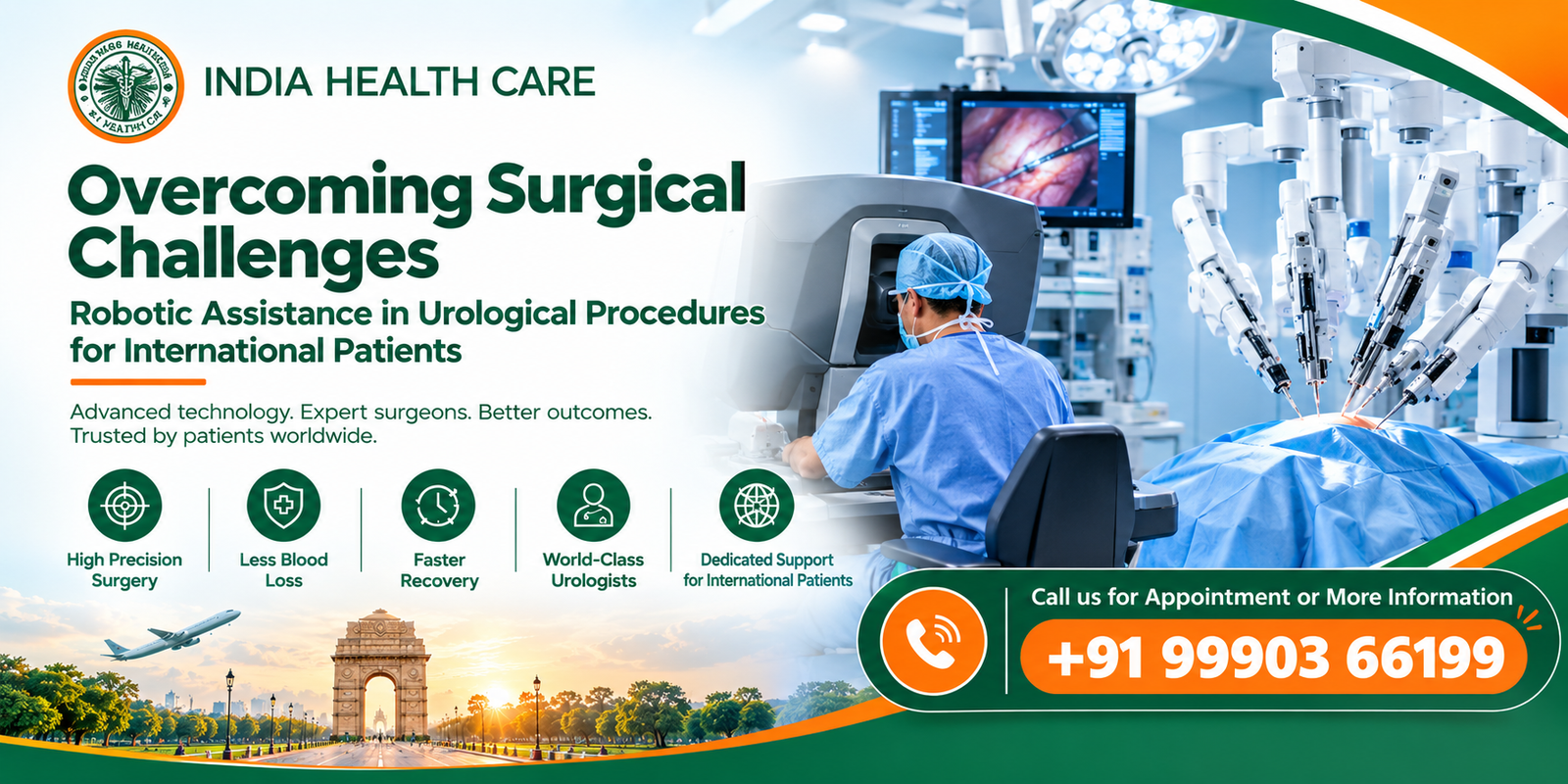
Robotic surgery does not mean a robot operates on its own. A trained surgeon sits at a console a few feet from the operating table and controls robotic arms fitted with tiny instruments and a high-definition 3D camera.
Every movement the surgeon makes is scaled down and filtered for tremors before the robotic arms replicate it inside the patient's body. The result is far greater precision than the human hand alone can achieve, especially in narrow spaces like the pelvis.
Common Robotic Urological Procedures
- Robotic radical prostatectomy – removal of the prostate gland, most often for prostate cancer
- Robotic partial or radical nephrectomy – removal of part or all of a kidney affected by a tumor
- Robotic cystectomy – removal of the bladder, usually followed by reconstruction
- Robotic pyeloplasty – repair of blockages in the kidney's drainage system
- Robotic adrenalectomy – removal of adrenal gland tumors
Each of these procedures used to require large open incisions. Today, they are commonly performed through a handful of small ports, roughly the size of a keyhole.
How the Robotic System Actually Works
It helps to understand the mechanics, since many patients arrive worried that "robotic" means less human involvement. In reality, the opposite is true. The surgeon is in full control at every second, viewing a magnified 3D image of the surgical area that is far more detailed than what the naked eye can see during open surgery.
The robotic arms hold instruments that can bend and rotate in ways a human wrist cannot. This is often called "endo-wristed" movement, and it is one of the biggest reasons robotic surgery has become the preferred method for procedures deep inside the pelvis, such as prostate and bladder surgery.
Recovery after these procedures also benefits from a technique called nerve-sparing surgery, where the surgeon carefully separates the cancerous tissue from surrounding nerve bundles instead of cutting through them. Robotic precision makes nerve-sparing far more consistent and repeatable than it was with older open techniques.
How Robotic Assistance Helps Overcome Surgical Challenges
1. Better Precision in Tight Spaces
The pelvis is crowded with nerves that control continence and sexual function. Robotic arms can rotate a full 360 degrees, well beyond what a human wrist can do, allowing surgeons to work around these nerves with much finer control.
2. Less Blood Loss
Because the instruments are so precise, blood vessels can be identified and sealed before they are cut. Patients typically lose far less blood compared to open surgery, which also reduces the chance of needing a transfusion.
3. Shorter Hospital Stays
Smaller incisions mean less trauma to the body. Many patients who undergo robotic kidney or prostate surgery go home within two to four days, compared to a week or more with open surgery.
4. Faster Return to Normal Life
Recovery time is one of the biggest concerns for anyone traveling internationally for surgery. Smaller wounds heal faster, letting patients resume light activity sooner and, importantly, become fit to fly home sooner.
5. Lower Infection Risk
Fewer and smaller incisions mean less exposed tissue, which naturally lowers the risk of surgical site infections — a real concern for anyone who has to travel soon after an operation.
Why International Patients Choose India for Robotic Urology
India has become a major hub for medical tourism India seekers, and urology is one of the specialties driving that growth. A few reasons stand out.
Patients from the US, UK, Canada, Australia, and across Africa and the Middle East are increasingly choosing medical tourism India packages that bundle surgery, hospital stay, and recovery support into a single, transparent plan. This kind of clarity is rare in many home healthcare systems, where costs can be unpredictable and waiting times uncertain.
Skilled, Internationally Trained Surgeons
Many of India's leading urologic surgeons trained or worked abroad before returning home, bringing global standards of care with them. Hospitals here regularly perform hundreds of robotic urological cases a year, and experience matters enormously in outcomes.
Advanced Technology Without the Long Wait
Top hospitals across Delhi, Mumbai, Chennai, Bengaluru, and Hyderabad operate the latest robotic surgical systems. Unlike in some countries where robotic slots can be booked out for months, international patients in India can often be scheduled within a matter of weeks.
Significant Cost Savings
This is where India stands out most clearly. The same robotic procedure that might cost $30,000–$50,000 in the United States can often be done in India for a fraction of that price, without compromising on the surgical technology used. This is why affordable cancer treatment in India has become such a common search phrase among patients from the US, UK, Middle East, and Africa. Importantly, lower cost does not mean lower quality — the same robotic platforms, the same surgical techniques, and often surgeons with the same international training are behind both the expensive and the affordable cancer treatment in India options available today.
For families who have been quoted overwhelming sums back home, this combination of quality and affordability is often the deciding factor. Many patients report that a full treatment package — including surgery, hospital stay, and a short recovery period — still costs less than a single week of hospitalization in their home country.
End-to-End Support for Foreign Patients
Most hospitals that regularly treat international patients offer dedicated international patient desks. These teams typically help with:
- Visa invitation letters
- Airport pickup
- Interpreter services
- Coordination between departments
- Post-discharge follow-up over video calls
Cost Comparison: Robotic Urological Surgery Across Countries
Here's a general idea of how costs can compare. Actual prices vary by hospital, surgeon, and complexity of the case, so always request a personalized quote.
Even after factoring in flights, accommodation, and a companion's stay, treatment in India frequently costs 60–80% less than in Western countries. That gap is a major reason medical treatment in India continues to attract patients from across the globe. It's worth noting that pricing for medical treatment in India typically includes the surgeon's fee, robotic system usage charges, hospital stay, and standard medications, though it is always wise to confirm exactly what is and isn't included before booking.
Finding the Best Hospital in India for Robotic Urology
Not every hospital that owns a robotic system uses it the same way. When researching the best hospital in India for your case, look beyond the marketing and check a few practical things.
Many hospitals now publish outcome data, surgeon profiles, and even patient testimonial videos online. Comparing two or three shortlisted hospitals side by side, rather than picking the first one that appears in a search, is one of the simplest ways to find the best hospital in India for your specific diagnosis and stage of cancer.
Questions Worth Asking
- How many robotic urological procedures does the surgical team perform each year?
- What is the hospital's complication and readmission rate for this specific surgery?
- Is the robotic system the latest generation available?
- Does the hospital have an accredited international patient program?
- What does the total package include — surgery only, or hospital stay, medicines, and follow-up too?
Accreditation Matters
Look for hospitals accredited by NABH (India's national hospital accreditation board) or JCI (Joint Commission International). These accreditations indicate the hospital follows strict, internationally benchmarked safety protocols, which is one of the clearest signals when narrowing down the best hospital in India for a complex robotic procedure.
How to Choose the Best Doctors in India for Your Case
Technology is only half the equation. The surgeon's hands guiding that technology matter just as much, if not more.
When evaluating best doctors in India for a robotic urology procedure, consider:
Many patients find it useful to shortlist a few best doctors in India for their specific condition, request a video consultation with each, and compare not just their credentials but how clearly they explain the risks, benefits, and expected recovery timeline.
- Case volume – Surgeons who perform 100+ robotic cases a year tend to have measurably better outcomes than those doing occasional cases.
- Fellowship training – Many top Indian urologic oncologists have completed fellowships in robotic surgery in the US, UK, or Germany.
- Second opinions – Reputable surgeons welcome a second opinion. If a doctor discourages this, treat it as a red flag.
- Communication style – You will be trusting this person with a serious decision. Choose someone who explains things clearly and answers your questions without rushing.
A Practical Example
Consider a 58-year-old patient from Nigeria diagnosed with localized prostate cancer. In his home country, options were limited to open surgery with a long recovery and higher risk of incontinence. After researching robotic options, he traveled to a hospital in Chennai, underwent a robotic radical prostatectomy, and was discharged in three days. He returned home within two weeks, with continence largely preserved — an outcome that would have been far less certain with open surgery.
Cases like this are increasingly common and are a big part of why demand for robotic urology in India keeps growing.
Preparing for Travel: Visas, Documents, and Practical Tips
International patients often worry about the logistics as much as the surgery itself. Here's what typically needs to be arranged in advance.
Medical Visa
Most countries with strong medical tourism programs, including India, offer a dedicated medical visa (often called an "M visa" in India's case). This usually requires:
- A formal invitation letter from the treating hospital
- Proof of the medical condition, such as a doctor's referral or diagnostic report
- Valid passport with sufficient remaining validity
- Proof of sufficient funds to cover treatment and stay
Hospital international patient desks typically prepare the invitation letter once your case has been reviewed and accepted, which speeds up the visa process considerably.
Language and Communication
Large hospitals that regularly treat overseas patients usually have interpreters on staff for common languages, including Arabic, French, Russian, and Swahili, in addition to English. It's worth confirming this in advance if English is not your first language.
Accommodation for Patients and Companions
Most major hospitals are located near guesthouses or partner hotels that offer discounted rates for patients and their companions. Some hospitals even have on-campus recovery suites designed specifically for post-surgical international patients.
Currency and Payment
Payments are usually accepted via international wire transfer, credit card, or sometimes through partner medical tourism facilitators. Always request a detailed, itemized cost estimate in writing before transferring any funds. Comparing two or three quotes for medical treatment in India side by side can also help you spot any hidden charges before you commit.
What the Treatment Journey Typically Looks Like
Step 1: Initial Consultation (Remote)
Most hospitals allow patients to send reports — scans, biopsy results, blood work — for an initial review by a specialist before booking travel. This helps confirm whether robotic surgery is a suitable option.
Step 2: Travel Planning
Once a treatment plan is confirmed, the hospital's international desk typically assists with visa documentation, travel dates, and accommodation near the facility.
Step 3: In-Person Evaluation
On arrival, further tests may be done to confirm staging and overall fitness for surgery.
Step 4: The Procedure
Robotic urological surgeries generally take between two and four hours, depending on complexity.
Step 5: Recovery and Discharge
Most patients are up and walking within a day of surgery, with discharge typically between day two and day five.
Step 6: Follow-Up Care
Before flying home, patients usually have a follow-up check to confirm they are fit to travel. After that, many hospitals continue follow-up through video consultations.
A Closer Look at Recovery Timelines
Recovery speed is often the single biggest question international patients have, since it directly affects how long they need to stay away from home and work. While every case is different, here is a general pattern seen with robotic urological surgery:
- Day 0 (surgery day): Patient moves to recovery ward; pain is managed with medication.
- Day 1: Most patients are encouraged to sit up and take short walks to reduce clotting risk.
- Day 2–3: Catheter and drains are typically assessed for removal, depending on the procedure.
- Day 3–5: Discharge from hospital for most patients, moving to a nearby guesthouse or hotel.
- Day 7–10: Follow-up consultation to check the surgical site and overall recovery.
- Day 10–15: Fit-to-fly clearance for most patients, allowing travel back home.
Full internal healing can take four to six weeks, but this generally does not require staying in India the entire time — most patients can safely continue recovering at home under remote follow-up.
Risks and Realistic Expectations
No surgery is entirely risk-free, and it's important to go in with realistic expectations rather than assuming robotic surgery guarantees a perfect outcome.
Possible risks, though less common than with open surgery, can include:
- Infection
- Bleeding requiring transfusion
- Temporary urinary incontinence
- Nerve-related side effects
- Rare conversion to open surgery if complications arise mid-procedure
A good surgical team will walk you through these risks honestly during your consultation rather than glossing over them.
Quick Recap: What Makes India Stand Out
Before moving to the FAQ section, here's a short summary of why so many families end up choosing India for this kind of surgery:
- Access to the best hospital in India options equipped with the latest robotic systems
- A deep bench of the best doctors in India, many trained internationally
- Strong track record in medical tourism India with dedicated support for overseas patients
- Genuinely affordable cancer treatment in India without cutting corners on technology
- Comprehensive medical treatment in India packages that reduce financial surprises
Frequently Asked Questions
1. Is robotic surgery safer than traditional open surgery for urological cancers?
Generally, yes, in terms of blood loss, infection risk, and recovery time. However, safety also depends heavily on the surgeon's skill and experience, not the technology alone.
2. How long do international patients typically need to stay in India after robotic urological surgery?
Most patients stay between 10 and 15 days total, covering pre-surgery evaluation, the procedure, hospital recovery, and a follow-up visit before flying home.
3. Will my insurance cover robotic surgery in India?
Coverage varies widely by country and provider. Some international insurance plans do reimburse treatment abroad, so it's worth checking with your insurer and requesting an itemized quote from the hospital in advance.
4. How do I know if I'm a good candidate for robotic surgery instead of open surgery?
This depends on the type and stage of cancer, your overall health, and prior surgeries. A specialist review of your scans and reports is the only reliable way to know — most hospitals offer this remotely before you travel.
5. Can a family member stay with me during treatment in India?
Yes. Most hospitals allow and even encourage a companion to stay with the patient, and many offer guesthouse or nearby hotel arrangements for attendants.
Final Thoughts
For anyone still comparing options, remember that medical tourism India is not a niche path anymore — it's a well-established route that thousands of patients take every year for affordable cancer treatment in India without compromising on surgical quality. Robotic-assisted surgery has genuinely changed what's possible in urological care — smaller incisions, more precision, faster recovery, and better preservation of nerve function than older open techniques allowed. For international patients, pairing this technology with India's combination of skilled surgeons, modern hospitals, and significantly lower costs makes the country a serious option worth researching.
If you or a loved one is weighing treatment options for a urological condition, the smartest first step is simple: get your reports reviewed by a specialist before deciding anything. A clear, honest opinion from an experienced robotic surgeon can help you make a decision with confidence rather than fear.
Ready to explore your options? Reach out to an accredited hospital's international patient team today, share your medical reports, and get a personalized treatment plan and cost estimate before you book a single flight.
Whether you are drawn by the best doctors in India, the appeal of affordable cancer treatment in India, or simply looking for a trustworthy second opinion, the right hospital and surgical team can make a genuine difference in both your outcome and your peace of mind.

